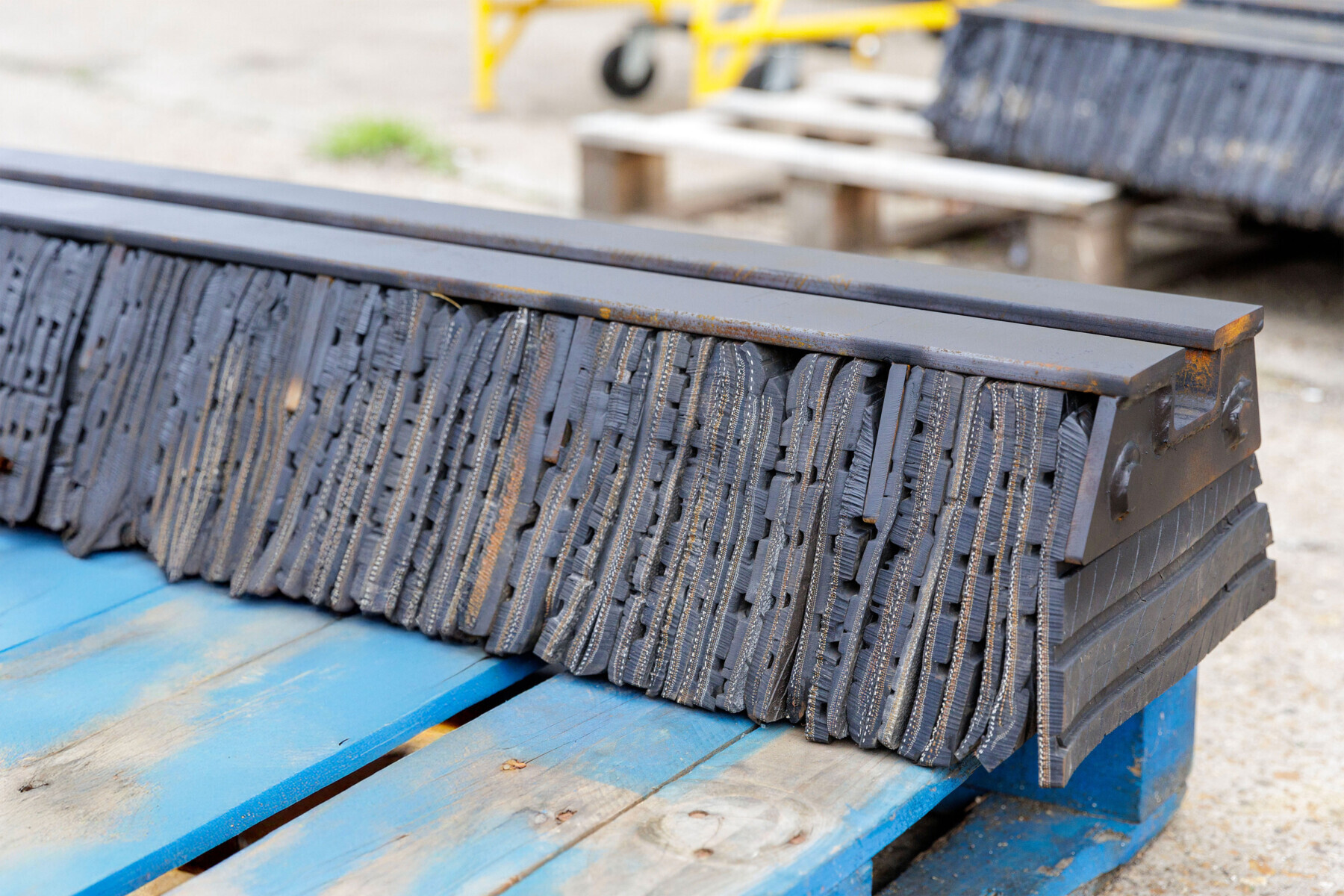
At LondonEnergy, we transformed end-of-life tyres into in-house rubber blades. This allow us to cut costs, reduce waste, and advance our sustainability goals. This case study shows how innovation, teamwork, and circular thinking delivered real financial and environmental impact at our Wembley site and beyond.
The opportunity we identified
At LondonEnergy, we’re always looking for ways to improve our operations, both financially and environmentally. Our team noticed a significant ongoing expenditure related to the rubber blades we purchased for our mobile plant which had to be replaced every three weeks. In fact, the Wembley Transfer Station alone was spending £56,000 on these blades every year. Simultaneously, we were dealing with the costs and logistics of disposing of end-of-life tyres. We saw this not just as a problem, but as a clear opportunity: what if we could turn these waste tyres into the very rubber blades we were constantly buying? This seemed like a perfect chance to both cut costs and enhance our sustainability efforts.

Morbi faucibus nam morbi commodo netus. Ullamcorper imperdiet odio duis tincidunt eu viverra velit ultrices. Eget felis suspendisse consequat amet malesuada.

Morbi faucibus nam morbi commodo netus. Ullamcorper imperdiet odio duis tincidunt eu viverra.

Morbi faucibus nam morbi commodo netus. Ullamcorper imperdiet odio duis tincidunt eu viverra velit ultrices. Eget felis suspendisse consequat amet malesuada.
The solution our team delivered
Our team, led by George Taylor (Site Manager) and Vaughn Rowland (Site Technician) at Wembley RRC, took on this challenge. Vaughn spearheaded the research into the machinery we would need, and together, they built a comprehensive business case that clearly showed the financial viability and environmental benefits of the idea.
The solution involved several key steps:
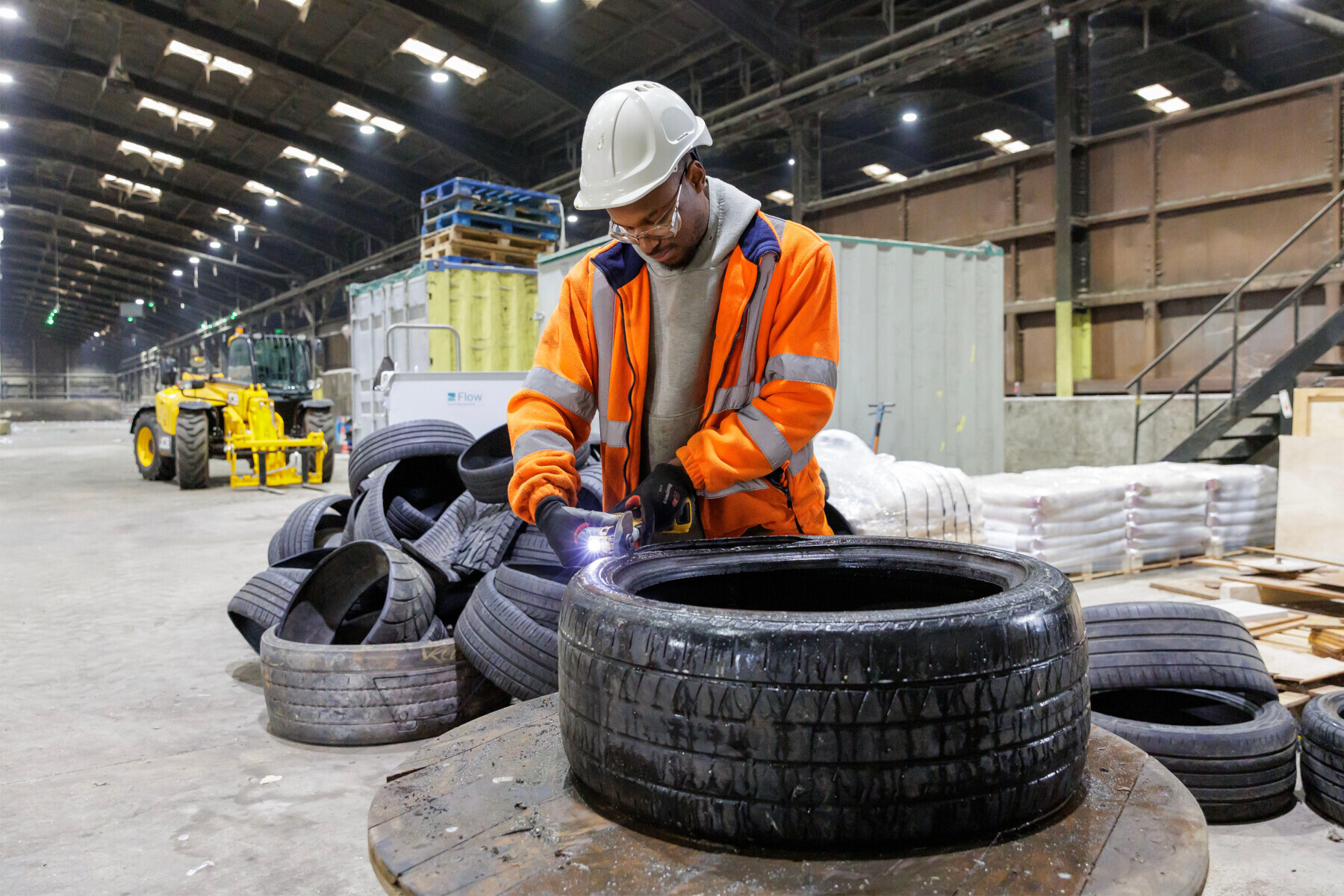
- Investing in the Right Machinery: We identified and acquired the necessary equipment, including water jet cutting technology, to effectively process end-of-life tyres into durable rubber blades.
- Repurposing Our Resources: We decided to use the end-of-life tyres that were already coming into our site as the primary raw material. This transformed what was once a disposal cost into a valuable input for our production.
- Developing Our Skills: We’re committed to our team’s growth, so we planned to upskill our existing staff at Wembley, training them to operate the new machinery and manufacture the blades
- A Phased Approach: We mapped out a clear implementation plan, starting with feasibility studies and investment approval, moving through procurement and setup, pilot testing, full production at Wembley, and eventually, the potential to expand our blade supply to other Waste Transfer Stations (WTSs) across the company.

The benefits and results we achieved
This project has been a tremendous success, delivering significant financial, environmental, and operational significant benefits, all while reinforcing LondonEnergy’s sustainability strategy and our core values:
Financial Impact:
- We predict that the project will become cost-neutral within 2.4 years of our initial investment.
- We anticipate annual savings of £56,000 just from rubber blade procurement at Wembley.
- We’ve significantly minimised the costs associated with disposing of end-of-life tyres.
- This opens up huge opportunities for long-term savings and potential scaling across our entire network of facilities.

Environmental Impact We’re Proud Of:
- Waste Minimisation: We’ve reduced the amount of waste tyres sent for disposal to almost nil, diverting tonnes of waste from landfill and other forms of disposal.
- Circular Economy: We’ve proudly promoted a closed-loop system by transforming a waste stream (end-of-life tyres) into a valuable operational input (rubber blades).
- Carbon Reduction: We’ve lowered our CO2 emissions by reducing the need for external blade procurement logistics and minimising tyre disposal-related emissions.
- Increased Reuse: We’ve seen a significant uplift in our site’s reuse percentage.
Operational & Strategic Impact on Our Business:
- Enhanced Control: We now have much greater material control and are less reliant on external suppliers for our rubber blades.
- Improved Efficiency: We’ve achieved lower lead times and more consistent blade availability for our mobile plant operations.
- Employee Engagement: This project has fostered our company values of “helpfulness” by creating shared solutions, “accountability” by empowering our staff to manage waste as a resource,
- Sustainability Alignment: Our project directly contributes to LondonEnergy’s sustainability strategy, our waste minimisation and carbon reduction goals, and the UK’s 2050 Net Zero Target. It also aligns perfectly with key UNDP Sustainable Development Goals (SDGs 9, 11, 12, and 13). and “questioning” by challenging traditional purchasing methods.
- Innovation: We’ve demonstrated practical innovation in resource management and sustainable industrial practices within our own operations.
- Skill Development: We’ve created exciting opportunities for upskilling our existing team, enriching their capabilities and contributing to their professional growth.
About this sustainable initiative
This initiative is a testament to what we can achieve when we challenge the conventional practices and embrace innovation. It’s a success story for LondonEnergy, showcasing how our team’s efforts can lead to significant financial savings, substantial environmental benefits, and a stronger, more sustainable operational culture.
You might also like
What started as a routine operational cost became an opportunity for innovation at LondonEnergy. This case study shows how rethinking waste as a resource is helping drive efficiency, resilience, and sustainability.
June 18th, 2026
The Be Kind campaign is part of LondonEnergy’s commitment to creating respectful, welcoming recycling centres. Designed to support frontline teams and visitors alike, the initiative shows how small changes can have meaningful impact.Discover how a simple message is making a real difference.
June 18th, 2026
The Be Kind campaign is part of LondonEnergy’s commitment to creating respectful, welcoming recycling centres. Designed to support frontline teams and visitors alike, the initiative shows how small changes can have meaningful impact.Discover how a simple message is making a real difference.
June 18th, 2026
What started as a routine operational cost became an opportunity for innovation at LondonEnergy. This case study shows how rethinking waste as a resource is helping drive efficiency, resilience, and sustainability.
June 18th, 2026